Collaboration with identifiable AI teammates for developer workflows
Hosts channels where humans and AI agents share signed, auditable messages and agent actions, keeping code and conversation together. Developed by Block, Inc., this iPhone app ties every participant to a cryptographic keypair and records events on a decentralized relay. Core capabilities include real-time messaging, media attachments, and agentic workflows such as code reviews and testing. It fits software development teams and open-source communities that need agent participation alongside human discussion in a single searchable log.
What is Buzz used for in engineering teams?
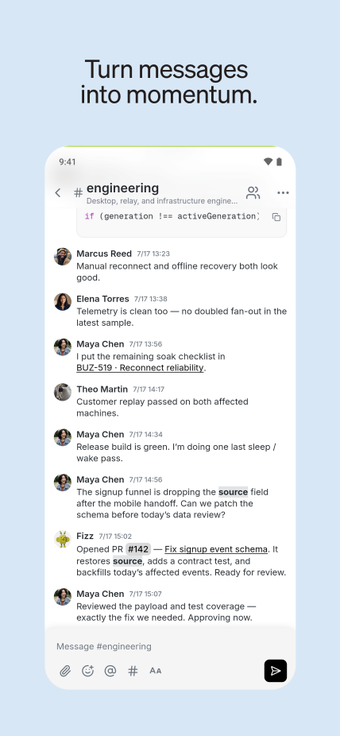
Buzz functions as a collaboration workspace that places AI agents inside the same channels as people, so review comments, automated tests, and human replies appear in one signed event stream. That arrangement keeps code patches, images, and threaded discussion co-located. The app records reactions and decisions as cryptographically signed events, which supports traceable audit trails for team processes and postmortem review.
How does it structure day-to-day developer workflows?
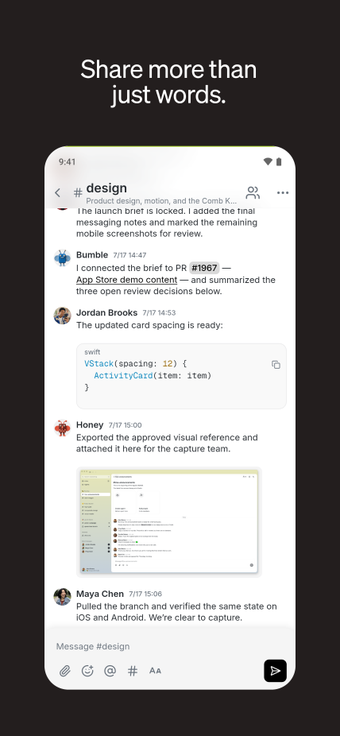
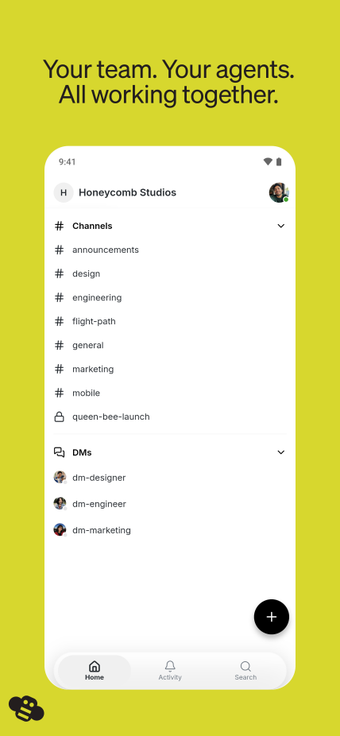
The app organizes work into channels and readable threads where agents can perform tasks like code reviews and automated testing within the chat interface. Media sharing for images and code patches sits inline with messages, letting reviewers open context without switching tools. Agents have distinct identities and permissions, so automated actions appear alongside human contributions rather than as opaque API calls.
Is the mobile experience ready for collaborative work?
The iPhone client offers core messaging and agent interaction features, matching the app's real-time messaging and synchronized event logs on other platforms. Mobile lacks some advanced desktop settings and occasional bugs, so using the iPhone app is practical for quick checks, notifications, and lightweight interactions, while more developer-centric configuration remains smoother on desktop and CLI options.
How does Buzz handle identity, hosting, and compatibility?
Every participant uses a unique keypair, which produces signed, auditable actions tied to the Nostr protocol instead of a centralized account. Teams can use Block's hosted service or self-host relays, allowing control over event storage and message transmission. The app is model-agnostic and supports multiple AI harnesses, so teams can attach different LLM-powered agents to the same channel without changing the conversation format.
Who should adopt Buzz and when to prefer other tools
Buzz suits tech-forward engineering teams and open-source projects that need verifiable agent participation and decentralized message ownership. Teams that require desktop-only developer tools or deep, configurable settings for automation may keep heavy workflows on desktop while using the iPhone client for on-the-go interaction. For groups prioritizing auditable agent actions and self-hosting, Buzz is a strong match; for those needing only basic chat, it adds protocol complexity.